How to Make and Sell Wax Melts: The Low-Cost Add-On That Grew Our Candle Business
Aug 20, 2026When we started Garsnett Beacon Candle Co. at our kitchen table during the pandemic, wax melts were an afterthought. We were pouring candles late into the night, and at the end of every batch we had leftover wax and fragrance sitting in the pot. Instead of tossing it, we started pouring it into little clamshell molds. Those "leftover" melts turned into one of the smartest low-cost add-ons we ever added to the business, and today they still sell steadily across our 160+ wholesale accounts and our stores in Holland, Michigan.
If you are learning how to start a candle business, wax melts are one of the easiest ways to add a second product without buying a pile of new equipment. Here is exactly how we make them, price them, and sell them alongside our candles.
Why wax melts belong in almost every candle business
Wax melts are flameless. That matters more than most new makers realize. A big chunk of shoppers cannot burn an open flame because of apartment rules, small kids, curious pets, or a nervous landlord. Melts let those people enjoy your scents in a warmer instead. So you are not splitting your existing customers, you are reaching new ones.
They are also a low-risk way for someone to try your brand. A customer who is not ready to spend on a full candle will often grab a melt to test your scent quality. When they love it, they come back for the candle. We have watched this play out for years: melts are the front door, candles are the follow up purchase.
And the economics are friendly. Your cost of goods on a melt is small, your packaging is cheap, and you can pour a lot of them fast. For a new maker trying to keep startup costs down, that is a real advantage. If you want to see how the numbers shake out for your own recipe, run them through our free candle business calculators before you set a price.
What you need to make wax melts
The good news: if you are already making candles, you probably own most of what you need. You will want a melting pot or pouring pitcher, a scale, a thermometer, your fragrance oils, and your wax. The only new items are the molds. We use clamshell molds, the six-cavity kind that snap shut, because they double as the packaging. Pour, cool, snap shut, label, done.
You do not need a wick, and that alone removes one of the most frustrating parts of candle making. No wick testing, no tunneling, no mushrooming. If you are new and still fighting your wick selection on candles, melts give you a quick win while you keep learning.
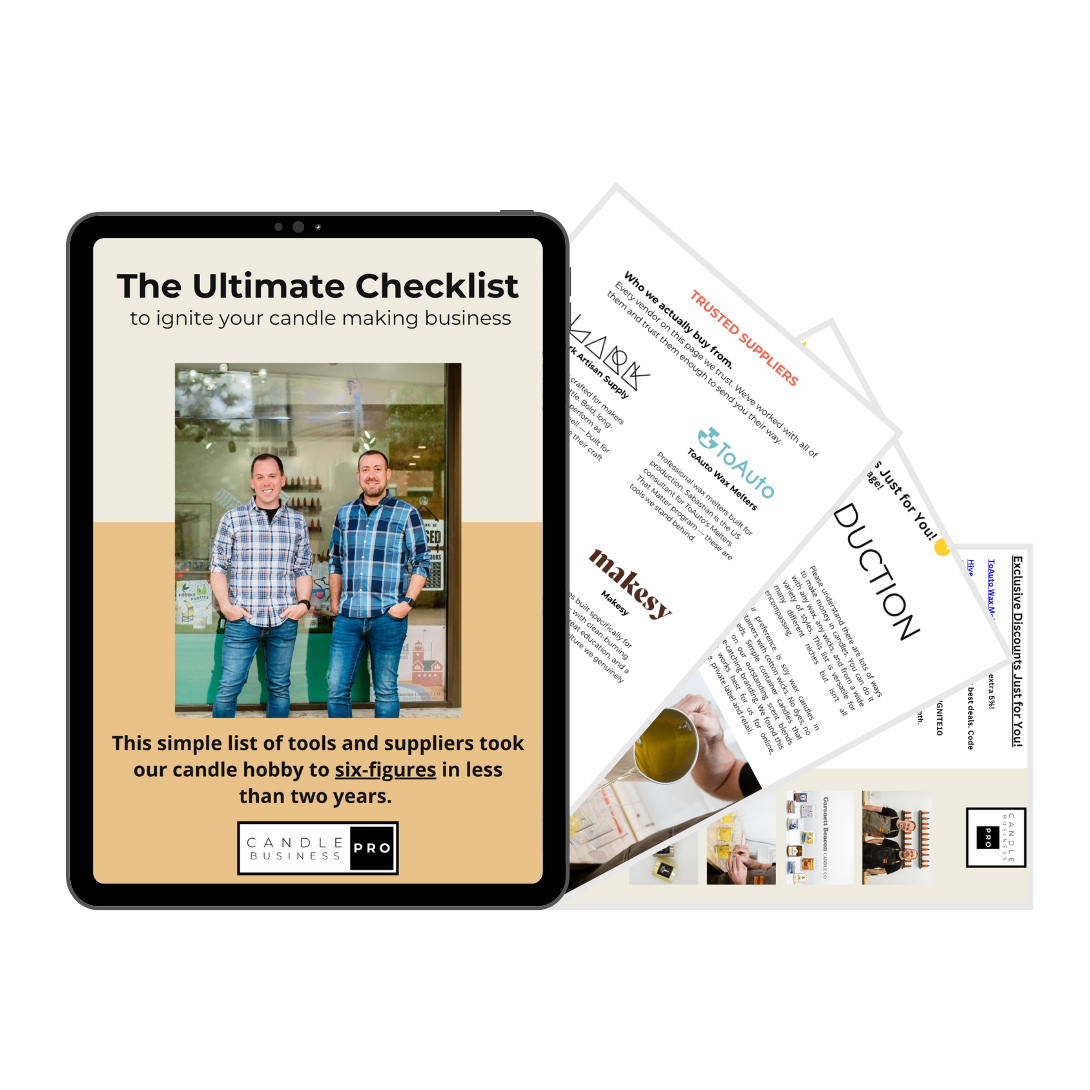
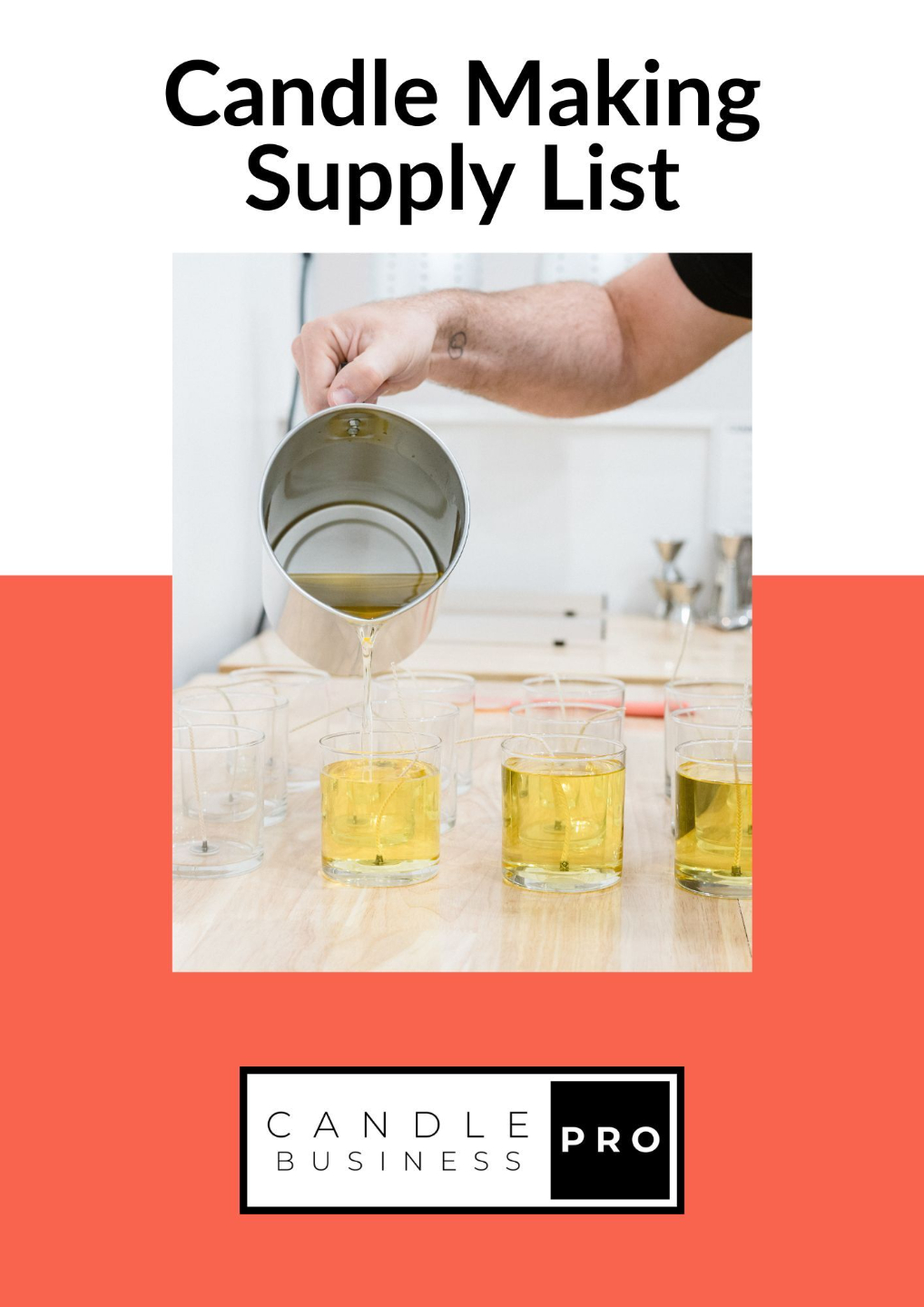
If you are not sure what supplies to stock or where to buy them, grab our free candle making supply checklist. It is the same starting list we wish we had when we began.
Choosing your wax and fragrance load
For melts you want a wax that holds fragrance well and releases a strong scent when warmed. Many makers use a dedicated wax melt blend or a soy blend formulated for melts. You can also use the same soy or coconut blend you pour candles with, as long as it gives you a good hot throw in a warmer.
Fragrance load is where melts really shine. Because there is no wick and no open flame, you can often push your fragrance load higher than you would in a candle, usually in the range of 8 to 12 percent depending on what your wax can hold. Always follow your fragrance supplier's maximum load and your wax manufacturer's recommendation. Then test. We always melt a fresh clamshell in a warmer at home for a full day before we ever call a scent ready to sell.
Our simple pour process
- Weigh your wax. Figure out how much your clamshell cavities hold, then weigh out that amount of wax plus a little extra for waste.
- Melt and cool to the right temperature. Follow your wax instructions. Overheating your fragrance is the fastest way to kill your scent throw.
- Add fragrance and stir. Stir gently for about two minutes so the oil binds evenly into the wax.
- Pour into clamshells. Fill each cavity almost to the top, but leave a hair of room so the shell still closes cleanly.
- Cool undisturbed. Let them set on a flat surface away from drafts. Rushing the cool down is how you get uneven tops.
- Cure before selling. Just like candles, melts throw better after a cure. We let ours rest for one to two weeks so the fragrance fully binds.
If you want to watch the process instead of read it, we walk through pours and product decisions on our YouTube channel.
Labeling your wax melts the right way
Melts still need proper labeling. Include your business name, the net weight, the fragrance name, and safety warnings for use in an approved wax warmer. Because a clamshell has limited space, many makers add a small back label or an insert card with full warnings and warmer instructions. Do not skip this. Labeling protects your customers and your business.
Pricing wax melts so they actually make you money
Here is the mistake we made early: we priced melts as an afterthought and left money on the table. Do not do that. Start by calculating your true cost per clamshell, including wax, fragrance, the clamshell, the label, and a share of your time. Then mark it up like a real product, not a giveaway.
In many markets a single clamshell melt sells at retail somewhere in the range of 5 to 8 dollars, and a lot of makers offer a "3 for" bundle to lift the average order value. Bundling is powerful here. Someone who came for one melt will often grab three when the deal feels good. Your exact numbers depend on your costs and your market, so plug your recipe into our calculators and set a price that leaves you a healthy margin.
Where to sell your melts
Melts sell beautifully at in person markets. They are an easy impulse buy, they are light to carry, and the price point feels low risk. We always set a basket of melts right at the front of our booth as the "try me" product. Online, list them as their own product and also inside gift bundles with a candle. And for wholesale, melts are a smart way to give a shop a lower priced item next to your candles. Some of our accounts reorder melts more often than anything else because they move fast at the register. If wholesale is on your radar, our free Wholesale 101 guide covers how we pitch and land accounts.
Start small and let melts grow with you
You do not need a huge lineup to begin. Pick your three or four best selling candle scents, pour them as melts, cure them, label them, and put them next to your candles. That is it. This is the same low cost, test as you go approach we teach in our free 10 step guide to starting a candle business, and it is exactly how our melts went from leftover wax to a real part of the business.
If you want to see how we present melts alongside our candles, take a look at our shop at Garsnett Beacon. And if you have questions or want feedback from other makers who are figuring this out too, come join us in our free Facebook community. We would love to see what you pour.
Meet The Author