The Candle Business Mistakes That Cost Us the Most (And How to Avoid Them)
Aug 26, 2026Nobody talks about the money you lose while you are learning. When we started Garsnett Beacon Candle Co. at our kitchen table during the pandemic, I thought the hard part would be making a candle that smelled good. That part came fast. The expensive part was everything I did not know yet: pricing, testing, buying, focus. Those lessons cost us real money, and I can put dollar figures on most of them.
I am sharing them here because I get asked all the time about the smart moves we made. The truth is we made just as many dumb ones. If you are figuring out how to start a candle business, you can skip the tuition we already paid. Here are the mistakes that hurt the most.
1. We underpriced everything for almost a year
Our first jars sold for 12 dollars. They felt expensive to us because we were nervous new makers who did not want to seem greedy. The problem was we had never actually added up what one candle cost to make. When we finally sat down and counted the wax, the fragrance, the wick, the vessel, the label, the lid, and the box, our real cost of goods was close to 5 dollars a unit before a single minute of labor.
At 12 dollars we thought we were making 7 dollars a candle. After packaging, market fees, card processing, and the hours of our own time, we were barely breaking even. Multiply that across a few thousand candles and you can see the hole. The day we rebuilt our pricing around actual numbers, our margins doubled overnight and nothing about the product changed. If you do one thing this week, run your own numbers with our candle pricing calculators so you never guess like we did.
2. We rushed to sell before we finished burn testing
Early on we found a soy blend and a fragrance we loved, poured a batch, let it sit two days, and started selling. It smelled amazing cold. Then customers started messaging us that the candles barely threw any scent once lit, and a few tunneled straight down the middle and drowned the wick.
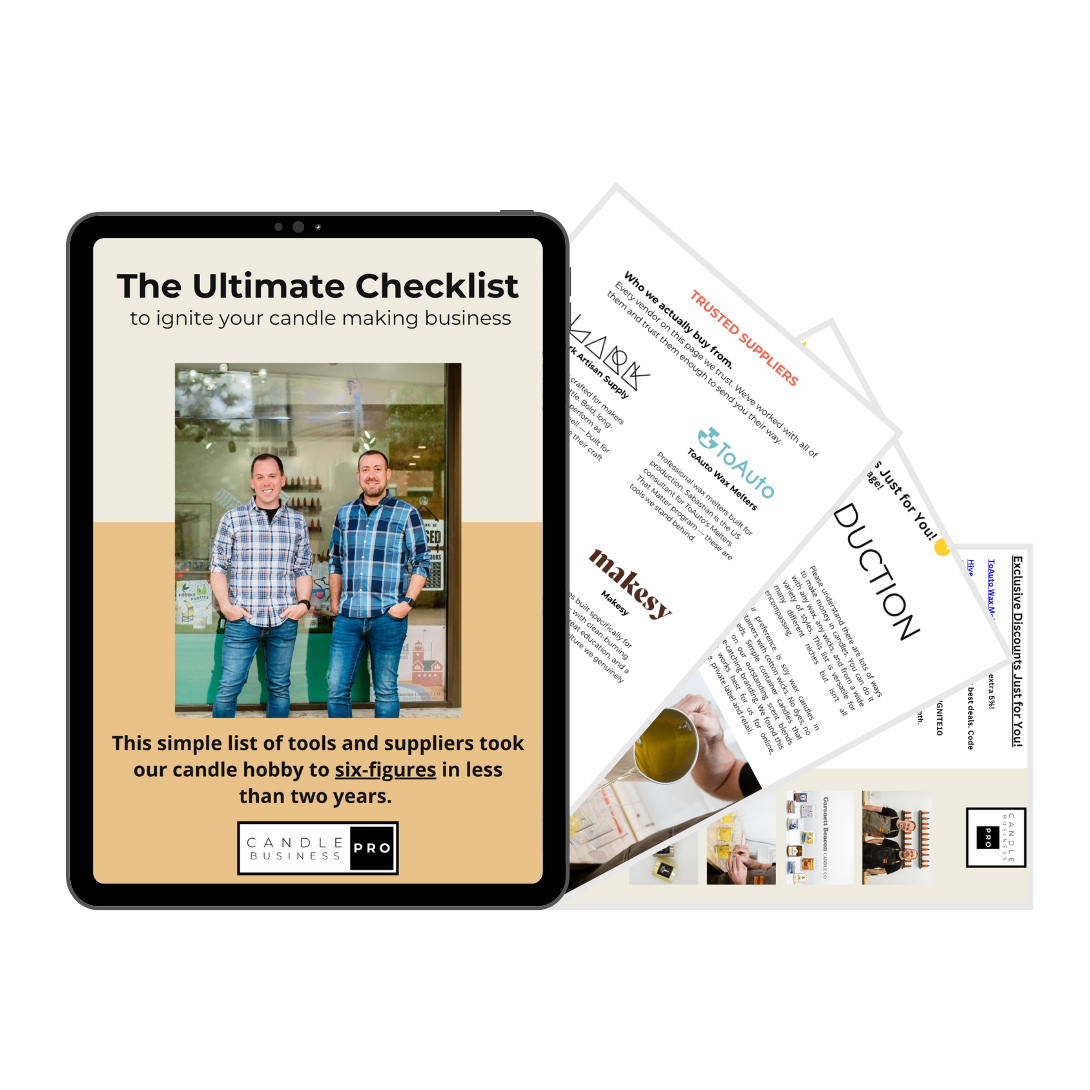
We had skipped real burn testing and proper cure time to get to market faster. We ended up reformulating the entire line, which meant buying new wicks in three sizes, retesting every vessel, and eating a shelf of candles we could not sell in good conscience. That mistake cost us a few hundred dollars in wasted materials and, worse, some early customer trust. Testing feels slow when you are excited, but it is the cheapest insurance you will ever buy. Our free candle supply checklist covers the gear you actually need to test the right way.
3. We bought supplies in tiny, expensive quantities
For our first several months we bought fragrance by the 4 ounce bottle and wax by the small bag because the upfront cost felt safer. It was not safer. We were paying premium per ounce prices on everything, running out mid batch, and paying shipping over and over.
Once we committed to a small core lineup and started buying wax by the case and our best sellers by the pound and the gallon, our material cost per candle dropped by a noticeable chunk. The lesson was not to hoard supplies. It was to stop paying the small quantity tax on the scents we already knew would sell. Buy small while you are testing, then buy smart once something proves itself.
4. We chased too many scents at once
At one point we had over 40 fragrances live. It felt like a strength. It was actually a cash trap. Every new scent meant another round of testing, another label design, more vessels tied up, and inventory sitting on shelves not moving. Our best 10 scents were doing almost all of the sales while the other 30 quietly ate our money.
When we cut the line down to our proven winners and a small rotating seasonal set, cash freed up, ordering got simpler, and our best sellers actually stayed in stock. More SKUs is not more business. Focus is.
5. We tried to be everywhere on social media
We spread ourselves across every platform posting mediocre content on all of them because we thought we had to. It burned us out and moved almost nothing. The month we picked one platform, showed up consistently, and told real stories about our candles, we finally started seeing sales come from social. You do not need to be everywhere. You need to be somewhere on purpose.
6. We waited way too long to build an email list
This one still stings. For our first year we had no email list at all. Every sale came from someone finding us again on their own or catching a random post. When we finally put a simple signup on our site and started sending a short note when we launched something, we realized our repeat customers had been ready to buy the whole time. We just had no way to reach them. An email list is the one marketing asset you actually own, and we left real money on the table by ignoring it.
7. We said yes to wholesale before we were ready
Our first wholesale account felt like we had made it. Then the reorder came in and we scrambled for a week, missed our margin because we had priced wholesale off a gut feeling, and nearly blew the relationship. Wholesale is one of the best things that ever happened to our business, and today we run 160 plus accounts. But you have to build for it: real production capacity, a proper wholesale price that still profits at half of retail, and clear terms. If wholesale is on your radar, learn the model first with our Wholesale 101 guide instead of winging your first order like we did.
What all of these have in common
Every one of these mistakes came from moving fast without knowing my numbers or my priorities. None of them ended us. We went from that kitchen table to a real production studio and multiple brick and mortar stores here in Holland, Michigan, and we are proof that you can make plenty of mistakes and still build something that lasts. The goal is not to be perfect. It is to make cheaper mistakes than we did and to fix the expensive ones fast.
If you want the full roadmap we wish we had at the start, our free 10 step guide to starting a candle business lays it out in order. To keep the whole operation organized as you grow, Makers Manager is the tool we lean on for our own numbers and inventory. And if you just want real makers to talk this through with, come hang out in our free Facebook group. We will happily help you avoid the ones that cost us the most.
Meet The Author