A Practical, No‑Fluff Launch Guide to Starting a Candle Business
Feb 23, 2026
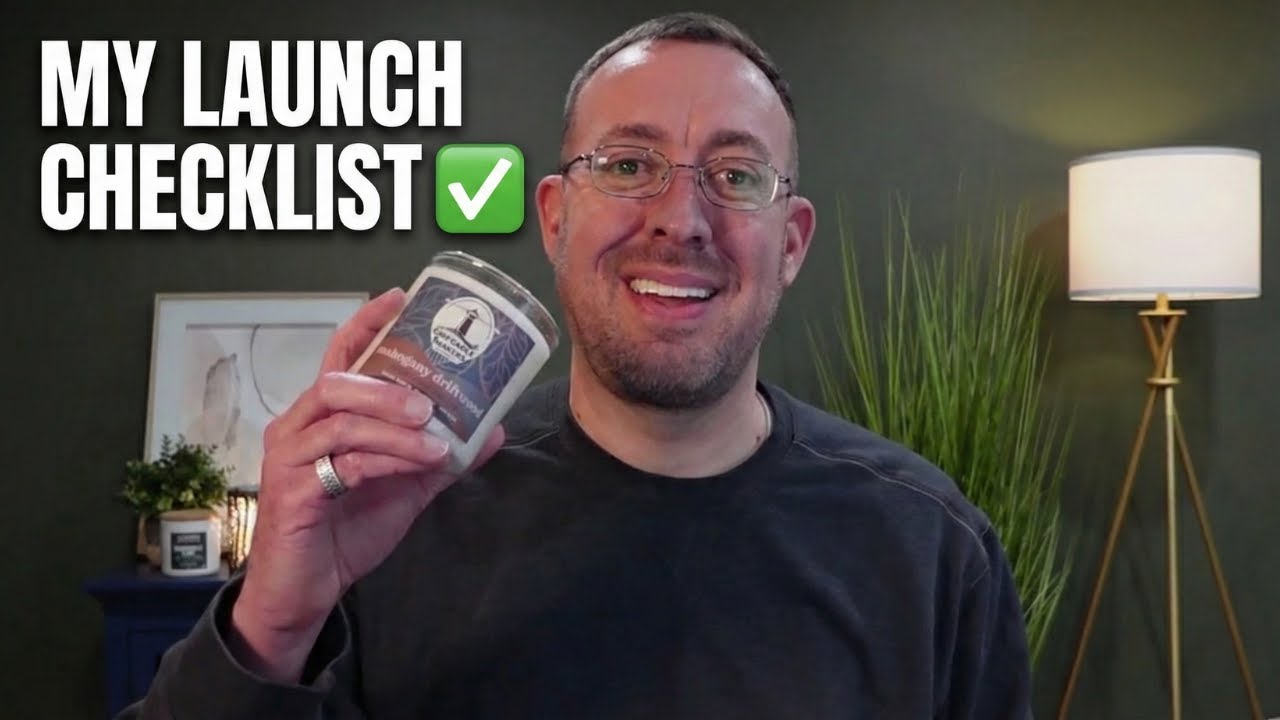
Learning how to start a candle business can feel overwhelming. Between safety testing, branding decisions, a website, and the fear of not being perfect, many makers stall for months. This guide explains exactly what matters at launch, the minimal setup you need, and the step-by-step actions to move from maker to seller. If you want to know how to start a candle business without waiting for perfection, this is the roadmap.
Table of Contents
- What "how to start a candle business" really means
- Why many candle businesses never launch
- The Minimum Viable Launch: 6 essentials for selling candles
- Choosing your initial scent lineup: why smaller is smarter
- Pricing and cost-of-goods: how to price for profit
- Packaging and branding minimums that won't delay launch
- Launch plan: a 30/60/90 day timeline for new candle brands
- Marketing tactics that move the needle fast
- Customer feedback as product development
- Common mistakes to avoid when you start selling
- Practical templates and examples
- How to test new scents quickly and cheaply
- Wholesale basics for new candle brands
- Troubleshooting common launch issues
- Checklist: Ready to launch?
- How to start a candle business: realistic revenue expectations
- Frequently asked questions
- Pitfalls, edge cases, and special situations
- Final checklist and next steps
- Wrap-up
What "how to start a candle business" really means
At its core, learning how to start a candle business means launching an operation that sells safe, well-priced products and can scale. It does not mean waiting for perfect photography, custom tissue paper, or a six-figure social following. The fundamental goal is to create a repeatable customer experience: product quality, clear buying path, legal compliance, and customer follow-up.
Why many candle businesses never launch
Perfectionism becomes procrastination. Makers delay launching while they chase ideal logos, packaging, or websites. The market is the best teacher when you learn how to start a candle business—customer feedback tells you what scents, packaging, and price points actually work. A lean launch gets you paid, provides real data, and preserves momentum.
The Minimum Viable Launch: 6 essentials for selling candles
When figuring out how to start a candle business, focus on these six essentials. If each is in place, you can launch confidently and legally.
- Safe product testing – Confirm burn performance, wick choice, fragrance load, container safety, and melt pool behavior.
- Business registration & sales tax setup – Register your entity and set up the ability to collect and remit sales tax.
- Business insurance – General liability and product liability coverage to protect against claims.
- Working website that accepts payments – A simple Shopify store is enough to begin selling.
- Basic social presence – A trust-building profile customers can check.
- Email capture / retention system – Automated purchase flows and an email list for repeat sales.
How to start a candle business: 1. Lock in safe candle testing
Safety is non-negotiable. Before you sell, test for:
- Stable wick size for your diameter and wax type
- No tunneling and a full melt pool at recommended burn times
- Secure adhesion of wax to container (no separation that causes instability)
- Reasonable fragrance load that does not interfere with combustion
- Safe temperature for glass or tins (no cracking or overheating)
Run at least 6–12 burns per formula, document results, and create a short testing log for each SKU. You will rely on these notes if a customer ever asks about safety or performance.
How to start a candle business: 2. Register your business & set up sales tax
Register your business with your secretary of state, get an EIN if needed, and register with your state Department of Revenue for sales tax collection. Steps:
- Choose entity type (LLC is common) and confirm name availability.
- File formation paperwork and create a basic operating agreement.
- Register for sales tax/seller’s permit in your state and any states where you have nexus.
- Set up your bookkeeping system to separate sales tax from revenue.
Collecting and remitting sales tax is part of selling. Not doing it creates compliance risk and can block growth.
How to start a candle business: 3. Get business insurance
Insurance protects your cashflow and reputation. Typical policies to consider:
- General liability insurance
- Product liability insurance
- Commercial property insurance if you rent production space
- Employer liability if you hire staff
Expect small monthly premiums for basic coverage. Think in terms of the number of candles you must sell to cover the premium—usually a few units per month. Many retailers and markets require proof of liability insurance to accept your brand, so it is also a business enablement tool.
How to start a candle business: 4. Build a working website (Shopify recommended)
Your website does not need to be award-worthy at launch; it must work. Priorities:
- Clear product pages (photos, scent description, burn time, materials)
- Checkout that accepts credit cards and PayPal
- Inventory tracking and order notifications
- Basic shipping configuration (rates or real-time quotes)
- Mobile responsiveness
Shopify is recommended because it handles payments, integrates with shipping and POS, and scales as you grow. If you are learning how to start a candle business, invest time in a functional Shopify store rather than paying for a custom site that will need constant edits.
How to start a candle business: 5. Create a basic social media footprint
A small, active social presence builds trust. You do not need a million followers to succeed. Use social media to:
- Show your product and behind-the-scenes process
- Collect quick customer feedback on scents or packaging
- Provide proof that your brand exists and ships orders
- Drive traffic to product pages and to collect emails
Post consistently—weekly is enough to start. Use social platforms as a discovery and trust channel, not a vanity metric machine.
How to start a candle business: 6. Capture emails from day one
Email is the highest-value channel for repeat purchases. At minimum set up:
- Order confirmation and shipping emails
- Post-purchase thank you and review request
- A win-back or discount flow for non-buyers
- A website popup or footer signup to collect addresses
Shopify Inbox or Klaviyo are common tools. When someone buys, an automated sequence that thanks them, requests a review, and offers a timed coupon drives repurchase.
Choosing your initial scent lineup: why smaller is smarter
One of the most common mistakes when learning how to start a candle business is launching with too many SKUs. Start with 4–6 reliably tested scents that cover different scent families. Example lineup:
- Citrus bright (lemon or grapefruit)
- Sweet gourmand (sugar + citrus blend)
- Fresh spa (eucalyptus or linen)
- Warm wood or amber (masculine/unisex)
- Floral (lavender or soft florals)
Why small? Fewer SKUs simplify production, inventory, testing, and marketing. Early customers will tell you which scent categories they love—and you can add adjacent scents later. If a scent flops, remove it and reinvest the space and marketing into winners.
Pricing and cost-of-goods: how to price for profit
Pricing is a critical pillar when you learn how to start a candle business. Use a simple formula:
- Calculate Cost of Goods Sold (COGS): container, wax, fragrance oil, wick, label, packaging, labor, amortized equipment.
- Add variable costs: shipping materials per order and payment processing fees.
- Set a target gross margin. Small brands commonly target 50–70% gross margin for direct-to-consumer pricing.
Example (numbers for illustration):
- COGS per candle: $6.00
- Packaging and shipping materials per candle: $1.50
- Payment processing (3% + 30c on a $28 sale): $1.14
- Total direct cost: $8.64
- Target retail price for 60% margin: Retail = Cost / (1 - Margin) = 8.64 / 0.4 = $21.60 → round to $22
Ensure wholesale pricing is typically 2.0–2.5x your COGS or 50% of retail. Track COGS closely; improve margin by buying materials in bulk and refining production efficiency as volumes increase.
Packaging and branding minimums that won't delay launch
Packaging is important, but not essential at perfection before you sell. Practical options to start quickly:
- Plain boxes tucked with simple tissue paper or kraft paper
- A printed label on the jar plus a simple hang tag
- A shipping sticker for return address and logo
- Branded receipts and a thank you card printed on a home printer
Customers care most about scent and burn performance. Branding can evolve. If custom tissue or bespoke boxes are holding you back, ship in plain but secure packaging and focus on product and service.
Launch plan: a 30/60/90 day timeline for new candle brands
Concrete timeline to convert testing into sales when you learn how to start a candle business:
Join the Inner Circle for Candle Businesses |
|
Where Candle Makers Go Pro |
| Yes I want in! |
Pre-launch (Weeks 0–2)
- Finalize 4–6 tested scents and label templates
- Register business and apply for sales tax permit
- Buy basic liability insurance
- Set up Shopify store with product pages, shipping, and payments
- Create social profiles and schedule 6–8 posts
- Set up email capture and basic flows
Launch (Week 3)
- Open store with a soft launch to friends, family, and email list
- Collect feedback and early reviews
- Promote 1–2 paid or boosted posts if budget allows
- List at one local craft market or pop-up
Post-launch (Weeks 4–12)
- Review sales data and customer feedback to identify top sellers
- Refine product descriptions and SEO for top pages
- If a scent performs well, design an adjacent scent to test
- Implement a simple customer retention sequence (discount for second purchase)
- Start pitching local boutiques if wholesale is a goal
Marketing tactics that move the needle fast
When learning how to start a candle business, use tactics that provide direct feedback and sales:
- Soft launch to your sphere: friends and family buy first and provide social proof
- Pop-ups and local markets for immediate sales and customer conversations
- Instagram and TikTok short clips showing scent testing and burn videos
- Email promotions that follow purchases: thank you, review request, limited-time coupon
- Paid ads targeted to lookalike audiences after you have 100+ customers
Focus on measurable, repeatable channels. Markets and email typically convert faster for small brands than chasing viral social growth.
Customer feedback as product development
Let customers shape your catalog. Use reviews, DMs, and market conversations to answer these questions:
- Which scents are asked for again and again?
- Do customers complain about burn time, soot, or throw?
- What price point feels fair to buyers?
- Which packaging elements matter to repeat customers?
Use this intelligence to drop flops quickly and double down on winners.
Common mistakes to avoid when you start selling
- Launching too many SKUs — spreads inventory risk and complicates testing.
- Underpricing — prices that don’t cover overhead stall growth.
- Skipping insurance — leaves you exposed and may prevent wholesale opportunities.
- Over-polishing visuals before selling — delays revenue and feedback.
- Ignoring shipping costs — unexpected high shipping can eat margins.
- Not tracking sales tax or bookkeeping — creates legal and financial headaches.
Practical templates and examples
Use these short, ready-to-adapt templates when you learn how to start a candle business.
Simple product description structure
- Title: Name + scent family (e.g., "Sunlit Citrus — Lemon & Sugar")
- Subtitle: One-line mood or use-case (e.g., "Bright, clean, and mood-lifting")
- Bullets: Burn time, vessel, key fragrance notes, materials
- CTA: "Add to cart — Ships in 1–3 business days"
Automated post-purchase email flow (3 messages)
- Day 0: Order confirmation + what to expect (shipping timeline)
- Day 3–7 after delivery: Thank you + short product care tips + request for review
- Day 14–21 after delivery: 25% off repeat purchase limited to 7 days
How to test new scents quickly and cheaply
When you learn how to start a candle business, speed of testing matters. Use these low-cost methods:
- Small 4-ounce sample runs in tins or small jars
- Send 10–20 samples to your email list or market visitors for feedback
- Use scent strips or small melt pots for cold throw testing before full pours
- Document wick sizes, fragrance percentages, and burn results in a spreadsheet
Quick sampling reduces risk and gives directional data before a full SKU roll-out.
Wholesale basics for new candle brands
If wholesale is an objective when you learn how to start a candle business, prepare these items:
- Wholesale price list and minimum order quantities
- Retail-ready product photos and pack shots
- Simple terms: lead time, returns policy, and invoicing method
- Proof of insurance and product safety documentation
Start with local boutiques and markets. Small retailers prefer brands that can supply a consistent, reliable order on short lead times.
Troubleshooting common launch issues
If sales are slow after you learn how to start a candle business, consider these diagnostic steps:
- No traffic: Ramp up content, market attendance, and basic paid ads.
- Traffic, no sales: Review product pages, pricing, shipping rates, and trust signals.
- Sales but low repeat: Strengthen post-purchase flows and offer a reseed discount.
- Many returns or complaints: Revisit testing and product quality control.
Checklist: Ready to launch?
Before you open for sales, confirm you have:
- Safety testing logs for each scent
- Business registration and sales tax account
- General/product liability insurance certificate
- A working Shopify store with payments enabled
- At least one active social profile with recent posts
- An email capture and automated post-purchase flow
- Basic packaging that protects the product in transit
- A launch date on the calendar
How to start a candle business: realistic revenue expectations
New candle businesses vary widely, but practical expectations for the first year when learning how to start a candle business:
- Micro brand selling at markets and online: $5,000–$50,000 in year one
- Small boutique brand with local wholesale: $20,000–$150,000
- Scaling DTC brand with consistent paid channels and wholesale: $150,000+
These are rough ranges. Your growth depends on margins, marketing, and consistency. Incremental improvements to COGS, marketing ROI, and product-market fit compound quickly.
Frequently asked questions
How much money do I need to start a candle business?
Startup costs vary. For a lean launch expect to spend $1,000–$5,000 covering formation, initial inventory for 4–6 SKUs, basic labeling, a Shopify store, and liability insurance. Larger launches with custom packaging and professional photography can cost more. Start small and reinvest sales to grow.
Do I need a permit to sell candles?
You need to register your business entity with your state and obtain any local business licenses required by your city or county. Plus, you must register to collect sales tax in states where you have nexus. Check local regulations for food and product businesses; requirements vary.
How many scents should I launch with?
Start with 4–6 tested scents covering different scent families. This keeps inventory manageable while offering variety. Add new scents based on customer data rather than assumptions.
Is Shopify necessary to start a candle business?
Shopify is highly recommended for ease of use, payment processing, and integration with POS and shipping tools. It is not strictly required, but it is the fastest path to a reliable e-commerce setup for new candle brands.
How important is branding at launch?
Branding matters long term, but it should not block your launch. Use a clean, consistent look that can evolve. Customers prioritize scent and performance; refine visuals as you scale.
What insurance do candle businesses need?
General liability and product liability are the minimum. If you sell wholesale or attend markets, many partners require proof of coverage. Costs are generally modest, and the protection is essential.
Pitfalls, edge cases, and special situations
Special circumstances you might encounter when learning how to start a candle business:
- Shipping hazardous materials: Some fragrance oils or solvents may trigger hazmat rules. Check your carrier rules for fragrance-loaded wax. Most standard candle shipments are fine, but verify when using unusual ingredients.
- International shipping: Customs, duties, and additional paperwork complicate cross-border orders. Consider limiting to domestic until operations stabilize.
- Retailer demands: Some retailers will request E&O, higher insurance limits, or specific packaging. Be prepared to negotiate minimum orders and lead times.
- Scaling production: As orders grow, plan for a production layout, labor, and a repeatable process to maintain quality.
Final checklist and next steps
When you are ready to act on how to start a candle business, follow these steps in order:
- Finalize and document safe test results for 4–6 scents.
- Register your business and sales tax account.
- Buy liability insurance and get a certificate.
- Launch a Shopify store with working checkout and shipping.
- Create a basic social profile and 6–8 posts that tell your story.
- Install an email capture and set up the three core automated flows.
- Set your launch date, announce to your sphere, and open for orders.
Starting is the most important action. The data you earn from real customers will guide what to refine next. Use this checklist to protect yourself legally, ensure product safety, and create revenue so you can iterate and expand.
Wrap-up
How to start a candle business is a repeatable process: validate safety, register the business, protect with insurance, create a working storefront, show proof of life on social, and capture emails. Aim for a lean, tested launch rather than perfection. Launching generates the customer feedback that teaches which products, prices, and packaging will actually succeed.
Meet The Author