
Candle Business PRO
Blog and resources to create and launch your candle business
Yes, trim the wick to a quarter inch before every test burn. That is the standard you design your candle around, and it is the same instruction you print on your label. But a question we get a lot goes one step further: should you also run a test without trimming, to copy the customer who never read...
Here is the short answer a lot of makers are surprised by: in the United States, the net weight on a candle is generally supposed to appear on the principal display panel, which is the main face a customer sees at the point of sale, not tucked away only on the bottom. It usually needs to be in both ...
Yes, you can collect emails at a market from almost everyone who stops at your booth, including the people who pay cash and even the ones who smell a candle, smile, and walk away without buying. The way to do it is to make signing up take about five seconds, give people a real reason to hand over th...
Here is the short answer we give customers all the time: yes, candles can be enjoyed in a home with pets, as long as you burn them safely and make a few smart choices about what goes into them. The flame, the smoke, and a handful of specific fragrance ingredients are what you actually need to think ...
Yes, you should prep your candle jars before you pour, but probably not the way most people assume. For brand new vessels, a quick wipe to clear out dust and any manufacturing film is usually all you need. The real mistake we see is pouring into a jar that is cold, dusty, or still a little damp, bec...
A question we get a lot is whether candle sample sets, sometimes called discovery sets or mini tins, are worth offering, and if so, whether you should hand-pick the scents or let the customer choose their own. Here is the short answer from someone who has sold a lot of candles: yes, sample sets are ...
The fastest way to keep your candle testing straight is to give every test candle a short batch code, write that exact code on the jar and in one running log, and record the handful of things that actually change your results: wax, fragrance oil and its percentage, wick, pour temperature, and pour d...
Short answer: to get your candle business found on ChatGPT and other AI search tools, you need the same things that build a real brand online, a clear website that says exactly what you sell and where, honest reviews out in the world, and mentions of your name on pages other than your own. AI tools ...
A question we get a lot is how to price a candle collaboration, the kind where another maker or brand wants to team up on a co-branded candle with both names on the label. The short answer: before you talk numbers at all, figure out who is actually selling the candle and why. That one question decid...
Can you remelt a candle and re-pour it? Yes, you technically can, and for a fresh, unused batch of wax it is totally fine. But for a candle that has already cured and sat around for weeks or months, the honest answer is that you usually should not, because most of the fragrance has already evaporate...
Yes, you can print your own candle labels at home, and for small runs it can save you real money. The short version: get a color inkjet with refillable ink tanks, print onto a waterproof synthetic label stock, and protect the print so oils and water do not smear it. Just go in with realistic expecta...
Store your fragrance oils tightly capped in a cool, dark spot away from sunlight and heat, and store your wax sealed, dry, and off the floor. Do that and most fragrance oils will hold up for one to two years, and your wax will usually last just as long. The reason this matters is simple: your oils a...
Meet The Author

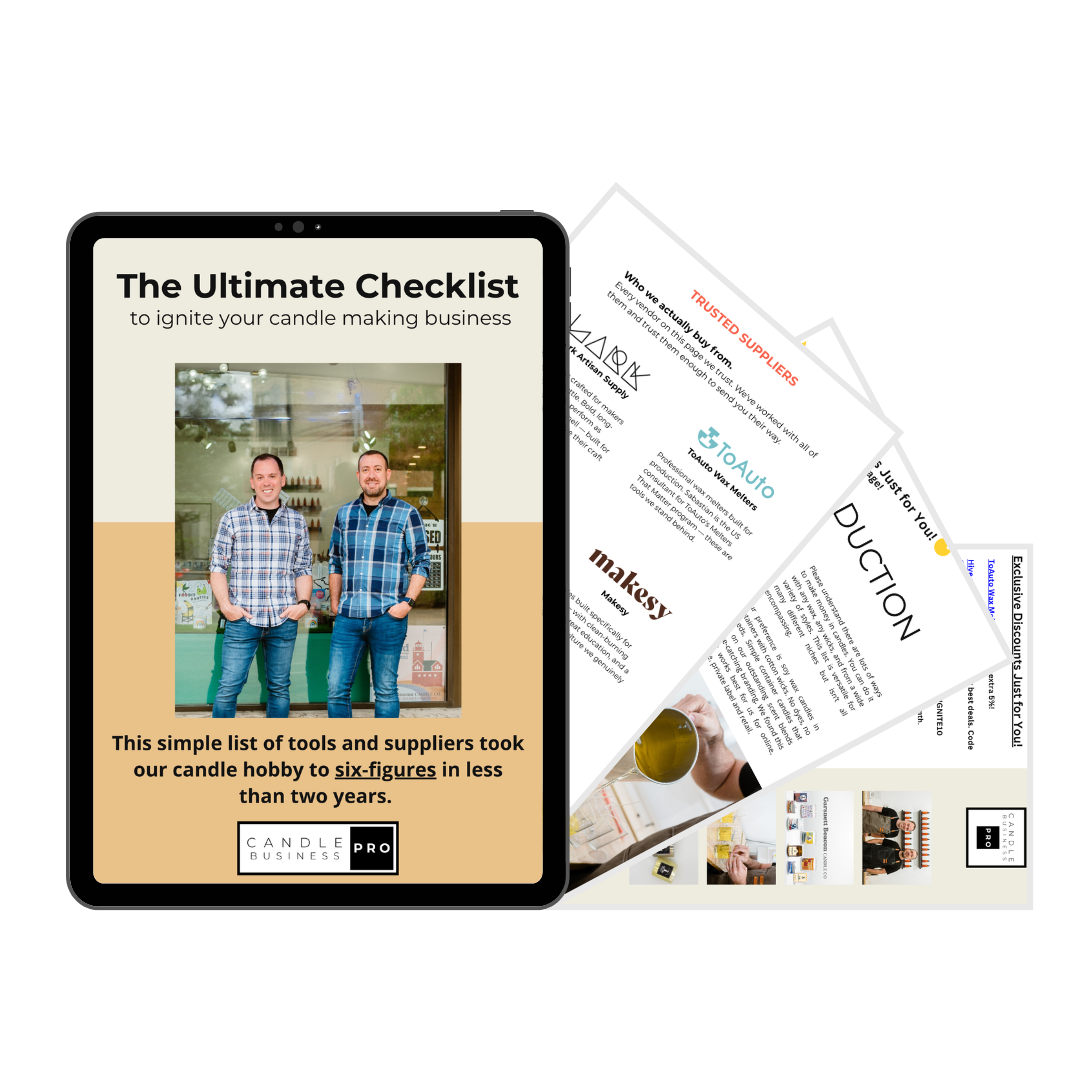
FREE DOWNLOAD
Everything we use to run our candle business — in one checklist.
Supplies, tools, vendors, and the discount codes we've negotiated for you. No guessing. Just the good stuff.